
Electronic Fall 2026 | Issue 68
Member Spotlight: Dr. Karen Pierce
Interview Conducted by Dr. Sudhakar Shenoy
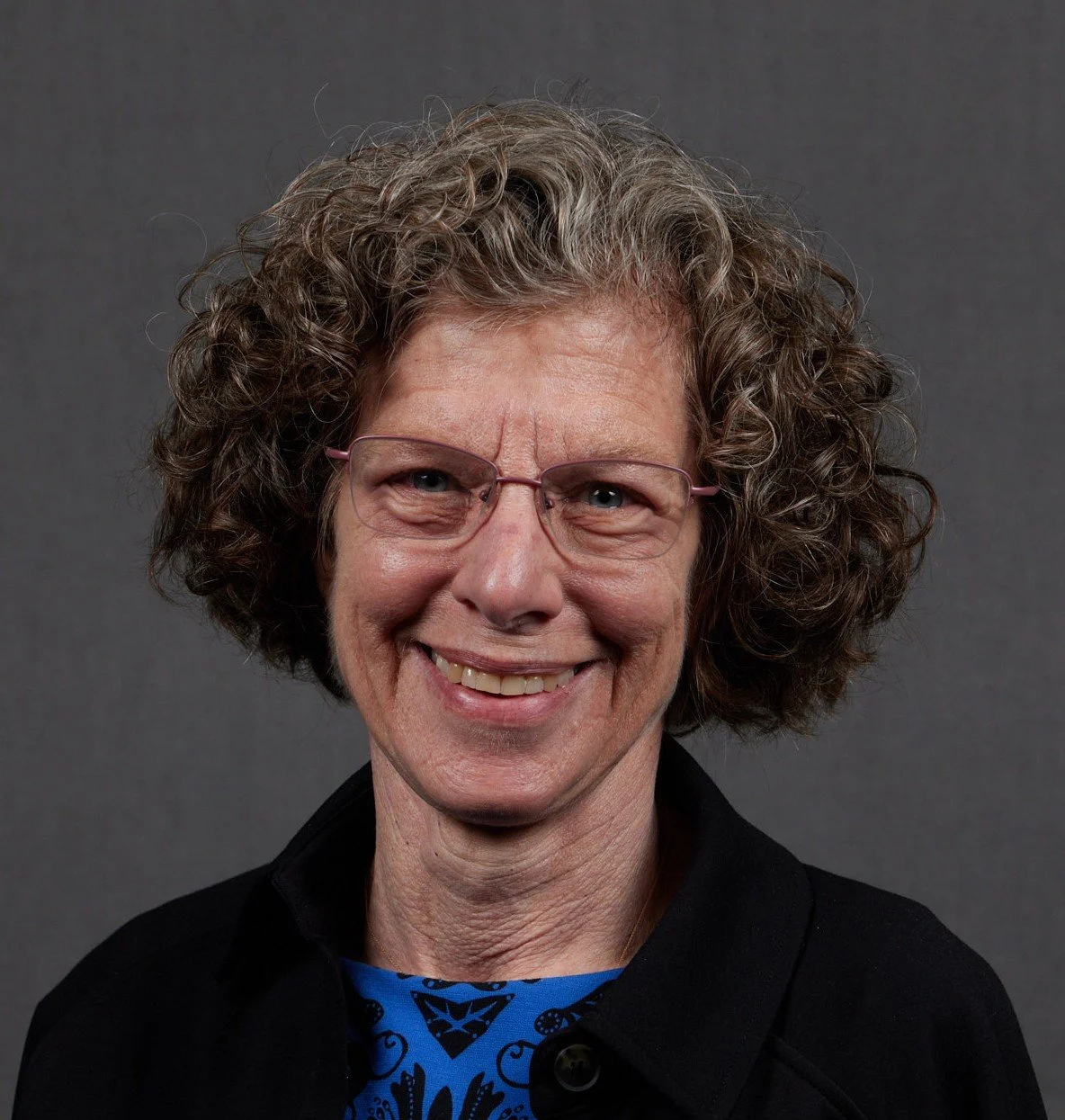
In this edition of the Mind Matters’ Member Spotlight, Sudhakar Shenoy, MD, speaks with longtime Illinois psychiatrist leader Karen Pierce, MD. A child and adolescent psychiatrist, educator, mentor, and nationally engaged advocate, Dr. Pierce reflects on building innovative clinical programs, advancing evidence-based care, representing children within organized medicine, and mentoring the next generation of psychiatrists.
1) Dr. Shenoy: Thank you for doing this interview, Dr. Pierce. Over the course of your career, you have done much more than see patients. You have helped develop programs including a therapeutic day school, child outpatient services, and a partial hospitalization program. What motivated you to build these programs, and what did those experiences teach you about what children and families need from the mental health system?
Dr. Pierce: I was fortunate to begin my career during a period when the evidence base in child psychiatry was rapidly developing. In 1999, the American Academy of Pediatrics was creating its first clinical practice guidelines for Attention-Deficit/Hyperactivity Disorder, and I was selected to serve as the child psychiatry representative. I remained involved with that committee for approximately 20 years, participating in revisions as our understanding of ADHD continued to grow. When I began my career, there was much less evidence guiding child psychiatric care than there is today. I therefore tried to say yes whenever I encountered an opportunity to build something innovative or advance the field. After completing my training at the University of Michigan, I moved to Chicago and spent approximately 13 years at Rush University helping to develop child psychiatric services. I later continued this work at Children’s Memorial Hospital, (now called Ann & Robert H. Lurie Children's Hospital of Chicago) including developing a partial hospitalization program because children needed an option between inpatient hospitalization and a therapeutic school. Those experiences taught me that children and families need a true continuum of care. We cannot wait until a child reaches a crisis and then offer only hospitalization or an intervention that does not fit the child’s developmental and clinical needs.
2) Dr. Shenoy: You have been deeply involved in organized medicine and psychiatry at the local and national levels, including IPS, ICCAP, AACAP, APA, the American Academy of Pediatrics, and the American Medical Association. How did that involvement begin?
Dr. Pierce: My involvement in organized medicine began while I was still in medical school. At the time, medical students were sometimes taking call every third night. I could not understand how we were expected to learn and practice medicine safely when we were so exhausted. I realized that meaningful change requires an entire community, not simply one individual raising a concern. That led me to become involved with the AMA and with efforts related to medical student and resident work hours. This was before many of the formal programs for student involvement that exist today. I discovered early that organized medicine allowed me to meet like-minded people and work toward change at the policy and national levels. I also became involved with the American Academy of Pediatrics while I was a medical student. Its meeting was being held in Chicago, so I volunteered. That involvement eventually exposed me to physicians and perspectives from across the country and internationally. Medicine is often very regional, and it is valuable to hear how people in other communities approach similar problems. Bringing those perspectives together can lead to better health care for children.
3) Dr. Shenoy: Advocacy has been a central thread throughout your career. Was there a particular experience that made you realize that being a good psychiatrist sometimes requires advocating beyond the walls of the clinic?
Dr. Pierce: When you work with children and families who are struggling, you quickly realize that children often do not have anyone speaking for them. Their needs can be overlooked in health care, education, and public policy. That was one reason I helped start a school. People did not always understand that children with significant emotional and behavioral needs required specialized educational approaches and services. Childhood is frequently idealized as a universally happy time, but we know that is not true for every child. Children need adults and professionals who understand development and who are willing to speak on their behalf. Even within the broader house of medicine, child and adolescent psychiatry is not always fully recognized for the knowledge it brings regarding children, youth, families, and development. That absence of a voice for children is what continues to drive much of my advocacy.
4) Dr. Shenoy: Your longstanding commitment to advocacy has now led to an important new national leadership role! You were recently appointed Chair of the American Psychiatric Association’s (APA) Council on Advocacy and Government Relations (CAGR), which serves as APA’s central coordinating body for advocacy and legislative activities. Congratulations on the appointment! What does taking on this role mean to you, and as you begin your tenure as Chair, what issues or advocacy priorities do you hope the Council and APA will focus on?
Dr. Pierce: I am very honored to take on this role. Advocacy has been an important part of my career because I learned early that meaningful change requires a community. There are limits to what any of us can accomplish for patients individually, particularly when the barriers they face are created by larger systems and policies. Organized medicine gives us a collective voice and an opportunity to educate policymakers about our patients, our profession, and what good psychiatric care actually requires. Throughout my career, I have been particularly concerned about ensuring that children and families have a voice, advancing mental health parity, and addressing inequities in access to appropriate psychiatric care. As Chair of CAGR, I hope we can continue bringing psychiatrists together around the issues affecting our patients and help our members understand that advocacy is something every psychiatrist can participate in.
5) Dr. Shenoy: You have also spoken about insurance barriers, mental health parity, and the difficulty of obtaining the level of treatment that patients need. What have you learned about advocating effectively when an insurer says no?
Dr. Pierce: Parity fundamentally means that mental health conditions should be treated with the same seriousness and fairness as other medical conditions. For many years, psychiatry was viewed as something behavioral or moral rather than medical. As a result, insurers and government systems often treated mental health care differently from physical health care. Those differences created substantial inequities in both private and public insurance. Policymakers and other medical professionals need education about these conditions and about the consequences of inadequate treatment. Effective advocacy requires more than challenging one denial at a time. We need organizations that can advocate collectively, educate policymakers, and help clinicians learn how to advocate for individual patients. We must continue explaining that fairness and equity apply to mental health just as they do to physical health.
6) Dr. Shenoy: You have had a front-row seat to several decades of change in psychiatry. Where have we made the greatest progress, and what concerns you most about the future?
Dr. Pierce: The growth in our knowledge of the brain, psychiatric disorders, prevention, and health has been extraordinary. We know so much more now than we did when I began my training, and we have a much stronger scientific foundation for understanding what can help patients. The difficulty is that our systems have not kept pace with the science. Advances in cancer or cardiovascular care are often incorporated into treatment and made available through the health care system. We should be able to make comparable advances in behavioral health, but access, reimbursement, and public policy have not consistently supported that progress. Psychiatric disorders and neurodevelopment are extraordinarily complex. In attempting to expand access, we must not abandon educational standards or the science underlying good care. Access is essential, but care without sufficient knowledge, training, and scientific grounding will not produce the outcomes patients deserve. Education and policy must continue moving forward together.
7) Dr. Shenoy: You have spent a significant part of your career teaching and mentoring medical students, residents, and younger psychiatrists. What qualities make you think that someone will become an excellent psychiatrist or leader?
Dr. Pierce: I love teaching, but I also love learning from the people I teach. Teaching should be a humbling experience because students and mentees often know a great deal and can teach us just as much as we teach them. One difference I see in younger generations is a high level of civic engagement. Young people can question assumptions and push the field in directions that those of us who have become accustomed to established systems may not see. We need their voices. Sometimes the simplest questions are the ones that require us to reconsider what we are doing and move the field forward. We must remain humble about what we know and what we do not know. My concern is that person-to-person education and mentorship are not always sufficiently valued. Artificial intelligence can help people acquire facts, but psychiatry and much of medicine are grounded in relationships. Mentorship is one of the ways we begin teaching younger professionals how to develop and sustain those relationships with colleagues, communities, and ultimately with patients.
8) Dr. Shenoy: Since this is Mind Matters, I want to ask specifically about the Illinois Psychiatric Society. What has IPS meant to you, and what would you like to see from the next generation of IPS members?
Dr. Pierce: Having local colleagues and understanding what is happening in one’s own community are essential. We often say that all politics is local, and that principle applies to advocacy and organized medicine as well. IPS allows me to understand the local psychiatric community, the culture in which we practice, and the colleagues working alongside us. Knowing the people in your own professional community is incredibly important. I would like to see stronger relationships between IPS and Illinois’ academic institutions. Academic departments may not always recognize how important a state organization is to advocacy, policymaking, and professional community-building. State organizations connect us with the issues affecting patients and psychiatrists where we actually live and practice. It is also deeply rewarding to know and collaborate with colleagues throughout Illinois.
9) Dr. Shenoy: What would you tell a medical student, resident, or early career psychiatrist who wants to become involved in advocacy or organized psychiatry but does not know where to begin?
Dr. Pierce: This is one of the most exciting ways the field has changed since I was in training. Organizations such as IPS, AACAP, APA, and the AMA now offer many opportunities for students, residents, and early career physicians to become involved and find mentors. I encourage trainees to take advantage of scholarships, fellowships, committees, meetings, and other opportunities offered by these organizations. They should also simply ask someone. If you know a psychiatrist or mentor who is involved, ask how you can participate. Most of us in organized medicine enjoy having students and younger colleagues involved, and we are usually happy to connect them with the right person or opportunity. You do not need a title before you begin contributing. Involvement is often how you develop the experience, relationships, and confidence that eventually prepare you for leadership.
10) Dr. Shenoy: Finally, we have talked about Dr. Pierce the psychiatrist, educator, advocate, and leader. Who is Karen Pierce outside medicine? What brings you joy and keeps you grounded?
Dr. Pierce: On my first day of medical school, I felt overwhelmed by how much there was to learn. I began practicing yoga and running, and I have continued those practices throughout my career. I walk more now than I run, but meditation, yoga, and regular exercise help me keep my body and mind calm. Walking is also some of my best thinking time. People who know me well understand that if we have a difficult problem to solve, we may need to take a walk together. I am also sustained by a large group of friends and family who mean a great deal to me. I enjoy theater, music, and dance, and I am an avid reader. When I am especially stressed, I go to what I call “Bookland”, I sit down with a book and read until I am finished. By then, I am usually much calmer. I also like to have fun. Life is too short, and we have to enjoy every moment.